One lesson, one teacher, three subjects
Quran, Arabic and Islamic Studies in one class
One live one-to-one lesson with one teacher, at the price of a single-subject lesson. You choose how the time is shared, and you can change it whenever you like.
Build your lesson
Pick a length, then drag the handles to share the time.
A 45-minute lesson: Quran 20, Arabic 14, Islamic Studies 11. This is an example; your teacher sets the real mix with you.
Try this mix in a free trialWhat is the Complete Class?
The Complete Class is one live one-to-one lesson that covers Quran, Arabic and Islamic Studies with the same teacher, at the same price as a single-subject lesson of the same length. The mix is flexible: you and the teacher decide how much time each subject gets, and you can change it whenever your child's needs change. Lessons of 40, 45 or 60 minutes fit all three subjects; in a 30-minute lesson the teacher covers two subjects and alternates them from one lesson to the next. It suits any age, from children of 4 to adults.
- Teacher
- One teacher for all three, chosen for this class
- Price
- Same as a single-subject lesson of that length
- Lesson length
- 40, 45 or 60 minutes; 30 minutes for two subjects at a time
- The mix
- Flexible, and you can change it at any time
- Books
- Alfjr's own story-based books, plus the Quranic Tarbiyah curriculum
- Ages
- Any age, from 4 to adults
- Girls and women
- Female teachers only
- Before you pay
- A free evaluation and trial
Why put three subjects in one lesson?
Most families want all three for their child, but not three timetables and three fees. A mixed lesson keeps the week simple and keeps a child curious.
Variety keeps attention
The activity changes every 10 to 20 minutes, so the lesson stays fresh, especially for younger children.
Each subject feeds the others
The Arabic words a child learns appear in the ayahs they read, and the meaning of those ayahs is what Islamic Studies is about.
A foundation in everything
Reading, language and faith are built together, so a child sees how they connect.
One teacher who knows your child
One person follows progress in all three, so nothing is repeated and nothing is missed.
One schedule, one price
No juggling. The lesson costs the same as a single-subject lesson of the same length.
One set of books
The teacher works from Alfjr's own books, written to be used side by side.
How do the three subjects connect in one lesson?
One ayah, taught three ways. Tap a subject to see what the teacher does with it.
الْحَمْدُ لِلَّهِ رَبِّ الْعَالَمِينَ
Surah Al-Fatihah, ayah 2
Read it correctly
Your child reads the ayah with the teacher, fixes each sound, then recites it from memory.
Understand the words
The teacher explains الْحَمْدُ (praise) and رَبّ (Lord), and your child uses them in a short sentence.
Live the meaning
A short talk about thanking Allah, and the moments in a day when we say Alhamdulillah.
Which books and curriculum does the Complete Class use?
Teachers work from story-based books written and reviewed by the Alfjr curriculum team, used only in Alfjr lessons, alongside the Quranic Tarbiyah curriculum. The teacher picks the book that fits your child's age and level in each subject.
Quran
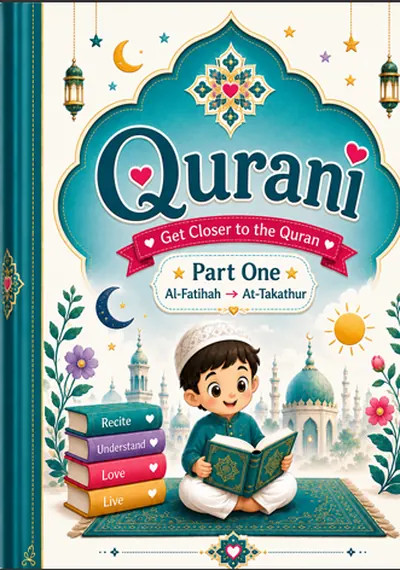
First readers start with Noor Al-Bayan. Then Qurani: Get Closer to the Quran teaches the short surahs so a child can recite, understand, love and live them. Part One covers Al-Fatihah to At-Takathur; Part Two covers Al-Qari'ah to Ash-Shams.
The Quran programme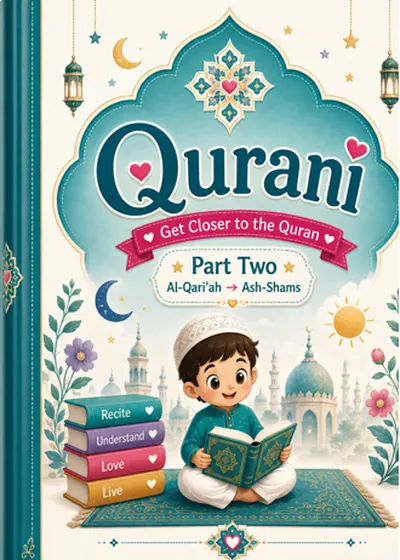
Arabic
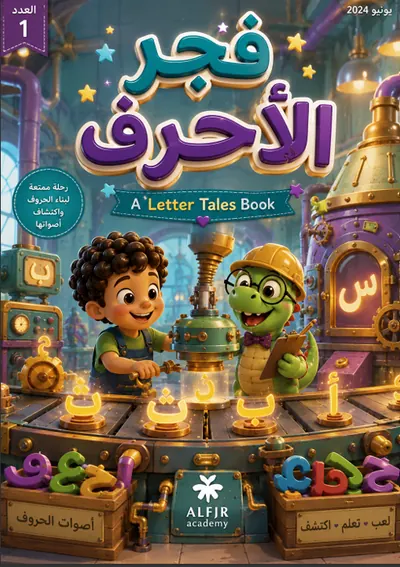
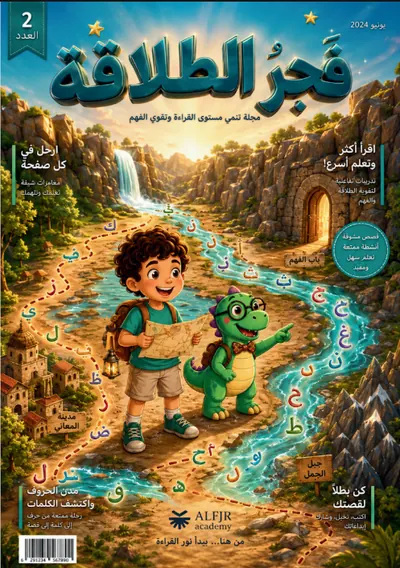
The FJR series follows a curious child and Dino, a little dinosaur, who must learn new letters and words to find the way home. FJR Letters teaches the shapes and sounds, FJR Reading 1 joins letters into first words, and FJR Fluency 2 builds faster reading with understanding.
The Arabic programme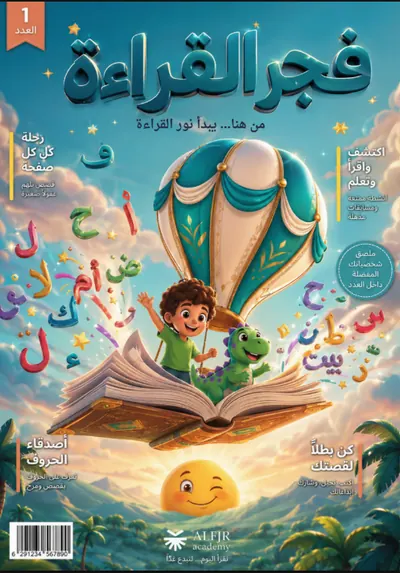
Islamic Studies
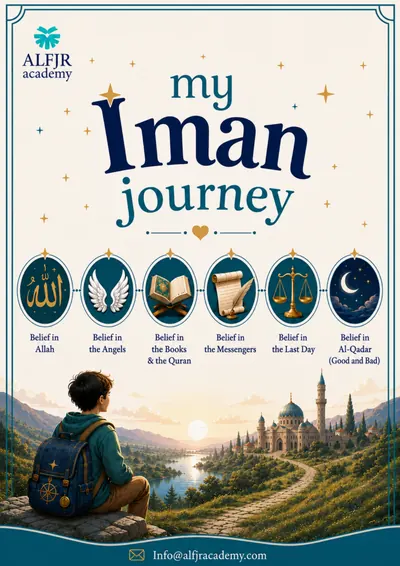
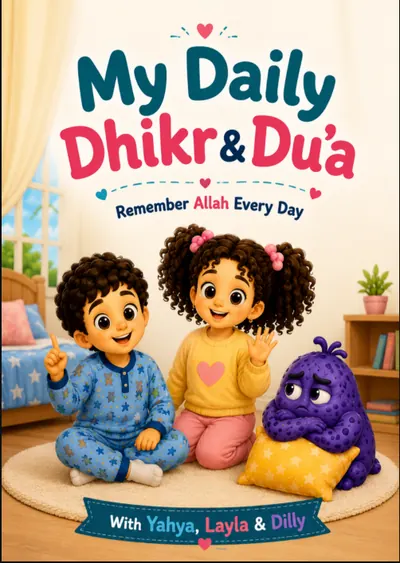
My Iman Journey teaches the six pillars of iman for ages 7 to 11. My Character as a Muslim teaches good manners through stories. My Daily Dhikr and Du'a ties twenty adhkar to real moments of a child's day, with Yahya, Layla and Dilly. Teachers also use the Quranic Tarbiyah curriculum for ages 5 to 11.
The Islamic Studies programme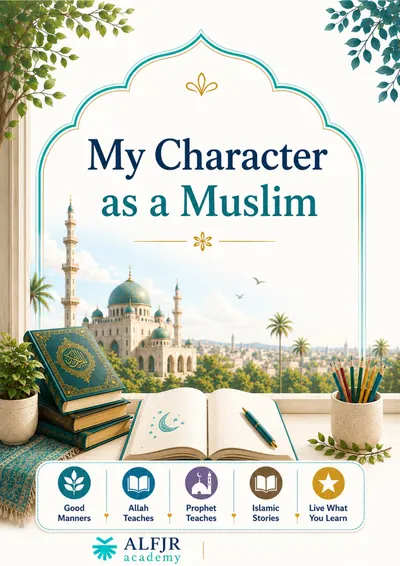
Taught the Alfjr way: the Joyful Learning Method
One familiar teacher, play, small wins every lesson and no shame for mistakes. Each age group, 4 to 6, 7 to 9, 10 to 12 and 13+, has its own teachers, lesson plans and books.
How is the lesson time divided?
These are examples of a balanced lesson. The mix is flexible: more Quran before a memorisation target, more Arabic before a school term, and so on.
| Lesson | Example split | Good for |
|---|---|---|
| 30 minutes | Two subjects per lesson, alternating: Quran and Arabic one day, Quran and Islamic Studies the next | Young children and short attention spans |
| 40 minutes | Quran 18, Arabic 12, Islamic Studies 10 | Ages 7 and up |
| 45 minutes | Quran 20, Arabic 14, Islamic Studies 11 | Most children and teens |
| 60 minutes | Quran 27, Arabic 18, Islamic Studies 15 | Teens and adults |
What does a week look like?
An example for a child of 8 taking three 45-minute lessons a week. Your plan is set after the free evaluation.
Lesson 1
- QuranNew lines from the reading book
- ArabicFive new words from those lines
- Islamic StudiesA story of a prophet
Lesson 2
- QuranA short surah with correction
- ArabicSimple sentences with this week's words
- Islamic StudiesHow we make wudu
Lesson 3
- QuranReview of the week and a little memorisation
- ArabicA short conversation
- Islamic StudiesA daily du'a and its meaning
At home: five to ten minutes a day of what the teacher sent in the lesson report. Need help planning the week? Build a weekly schedule.
Who teaches the Complete Class?
Not every teacher teaches this class. We choose teachers for it because they can teach Quran, Arabic and Islamic Studies well and move between them smoothly in one lesson. They are native Arabic speakers and graduates of recognized Islamic universities, matched to your child by age, level, language and schedule. Girls and women learn with female teachers only, and you receive a short report after every lesson.
One mixed class or three separate classes?
Both work. They suit different goals.
| Feature | The Complete Class | Separate single-subject classes |
|---|---|---|
| Teachers | One teacher for all three | Often a different teacher for each |
| Schedule | One timetable | Up to three timetables |
| Cost | Same as one single-subject lesson of that length | Each class is paid for separately |
| Depth per subject | A solid foundation in all three | More time on one subject |
| Suits | Families who want an all-round Islamic education | A focused goal, such as intensive Hifz |
Who is the Complete Class for?
It fits if you want your child, or yourself, to read the Quran, understand basic Arabic and know the essentials of the faith, without three separate classes. If you have one focused goal, a single-subject class gives it more time:
How much does the Complete Class cost?
The same as a single-subject lesson of the same length. There are no fixed packages: you choose the lesson length and how many lessons a week, and brothers and sisters can reach a family rate. The plan builder shows the monthly cost before you commit to anything.
Questions about the Complete Class
Can my child learn Quran, Arabic and Islamic Studies in one class?
Does the Complete Class cost more than a normal class?
Which books are used in the Complete Class?
Is 30 minutes enough for three subjects?
Who decides how much time each subject gets?
Is it the same teacher for all three subjects?
What age is the Complete Class for?
Can we switch between the Complete Class and a single-subject class?
Try one lesson with all three.
Book a free evaluation and trial. The teacher meets your child, finds the level in each subject and suggests a mix.
Reviewed by the Alfjr Academy team. Updated November 2026.