Introduction:
The Islamic identity of Muslims residing in non-Muslim societies is facing increasing challenges as they navigate the cultural complexities and influences of the dominant society. In this article, we explore the sources of potential misguidance and offer practical solutions and defenses to preserve and strengthen the Islamic identity of Muslims living in such environments.
1. Understanding the Islamic Identity:
Clarify the concept of Islamic identity, which encompasses a comprehensive way of life based on the teachings of the Quran and the Prophet Muhammad (peace be upon him). Emphasize the importance of maintaining distinct Islamic values, beliefs, and practices that differentiate Muslims from the wider society.
2. Education and Islamic Upbringing:
Recognize the impact of the education system on shaping children’s beliefs and behaviors. Highlight the challenges faced by Muslim children attending non-Muslim schools, such as the promotion of mixed-gender interactions and conflicting values. Stress the significance of providing a strong Islamic education at home to counterbalance these influences and instill a sense of Islamic identity.
3. Media Influence:
Address the influence of media, including television and other forms of media, in shaping perceptions and values. Discuss the portrayal of Muslims and Islam in mainstream media, which often perpetuates negative stereotypes and misconceptions. Advocate for critical media literacy and encourage Muslims to question and analyze media messages in light of Islamic teachings.
4. Social Interactions:
Acknowledge the necessity of interacting with non-Muslims in various aspects of life, such as work, study, and social settings. Emphasize the importance of maintaining strong Islamic values and beliefs while engaging with others. Encourage Muslims to seek supportive Muslim communities and friendships to reinforce their Islamic identity and find strength in shared values.
5. Knowledge and Faith:
Highlight the significance of acquiring Islamic knowledge and understanding the foundations of faith. Stress the importance of sound Aqeedah (theology) and knowledge of the Quran and Sunnah as a defense against misguidance. Encourage Muslims to seek authentic Islamic sources and engage in continuous learning to strengthen their faith and protect their Islamic identity.
6. Considering Migration:
Address the option of migrating to Muslim-majority countries where Muslims can live in an environment that supports and nourishes their Islamic identity. Recognize that this may not be feasible for everyone, but for those who have the means and opportunity, it can provide a more conducive environment for preserving Islamic values and practices.
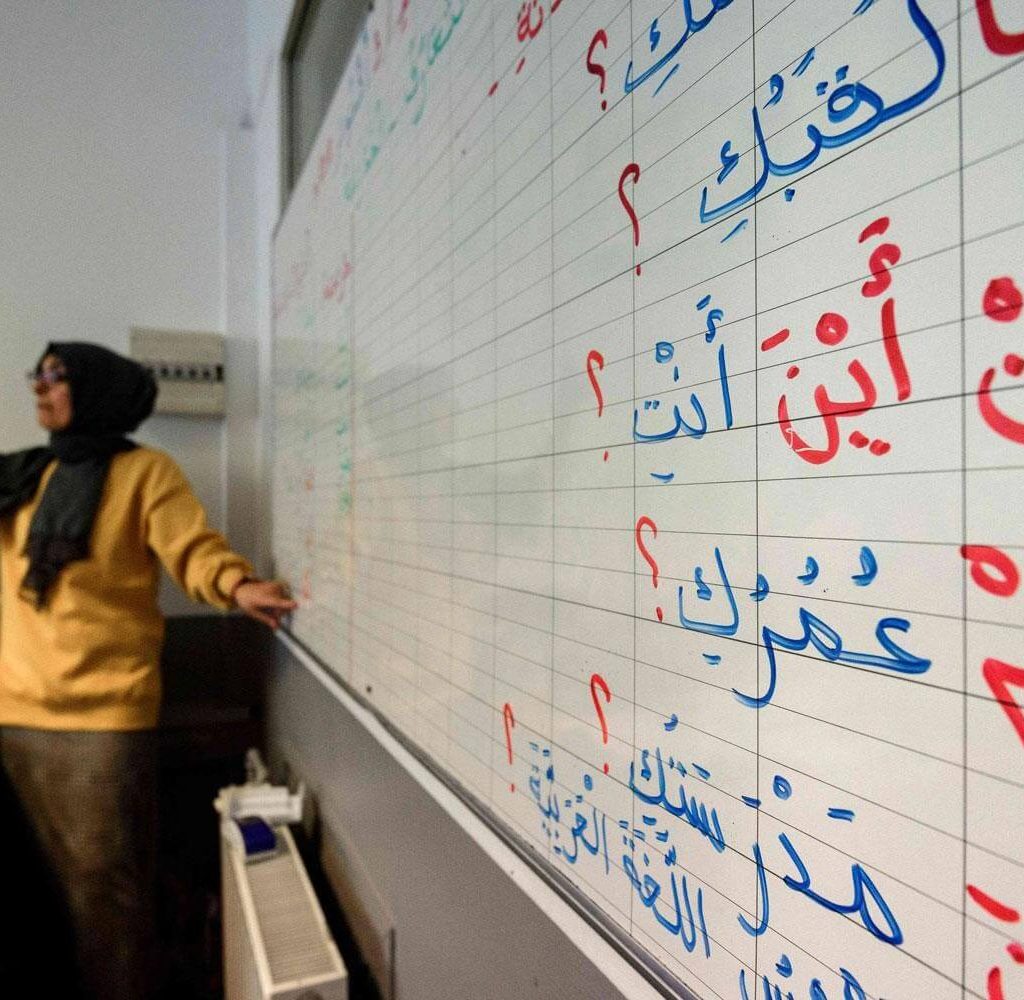
7.Creating a healthy environment for the child by introducing him to Islamic societies such as Islamic schools if you have a school of this type close to you and also by subscribing online to schools and academies specialized in teaching Arabic language and Islamic studies via the Internet “remotely” such as Alfjr Academy
Conclusion:
Preserving Islamic identity in a non-Muslim society requires a proactive approach that encompasses education, critical thinking, community support, and strong knowledge of Islam. Muslims must strive to maintain their distinct Islamic values and practices while engaging with the wider society. By empowering individuals with knowledge, fostering a strong sense of faith, and seeking supportive Muslim communities, Muslims can navigate the challenges and preserve their Islamic identity in a non-Muslim environment.